Each year, the Church celebrates the Sacred Triduum to usher in the Fifty Days of Easter. The Triduum begins at sundown on Holy Thursday with the celebration of the Evening Mass of the Lord’s Supper. This liturgy commemorates Christ’s gift of the Eucharist. Yet surprisingly, the Gospel that is proclaimed on this night does not include the story of the institution of the Eucharist. There is no narrative that includes the words “this is my body; this is my blood.”
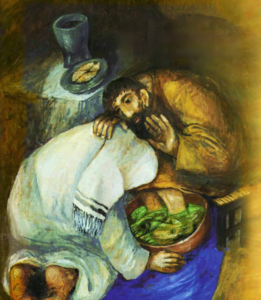
Instead, the Gospel for Holy Thursday is the story of Jesus washing the disciples’ feet. It is familiar in its humanity, especially as it relays Peter’s resistance and then his insistence that Jesus give him a full body wash. When Jesus washes the disciples’ feet, He asks them, “Do you realize what I have done for you?” He asks them to stop and reflect on their experience. Then Jesus gives the disciples —and us — the mandate to wash each other’s feet. He explains that what he has done, they — and we — also should do. Can we pause to reflect on the impact of Jesus’ gesture and his instruction that we are to wash each other’s feet?
Can we ponder the profound connection between celebrating the Eucharist and washing each other’s feet? Do we realize what the mandate to foot wash means for each of us as disciples of the Lord?
The reason why we celebrate or “do” Eucharist is so that each of us will, over time, become transformed into Christ. Indeed, the goal of changing the bread and wine into the body and blood of Christ is not ultimately the transformation of the sacred elements, but the transformation of us who eat and drink the sacred elements. This transformation is a lifelong journey that begins with baptism. At that sacramental event, each of us is plunged into a personal and communal participation in the Paschal Mystery of Jesus Christ. With Christ, our life is meant to be a participation in the dying and rising of Christ.
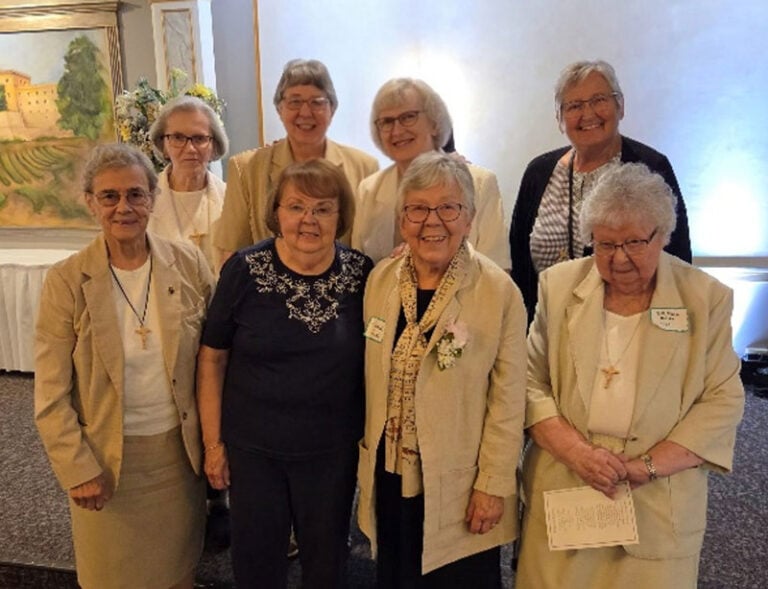
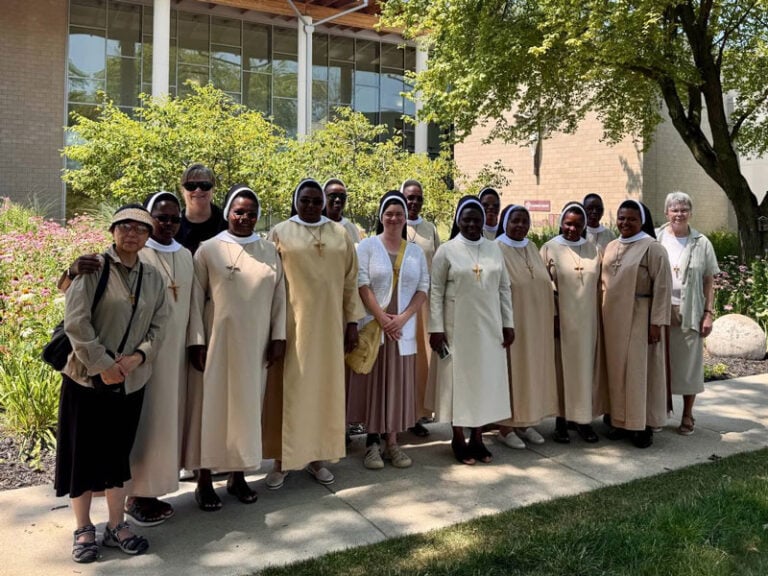
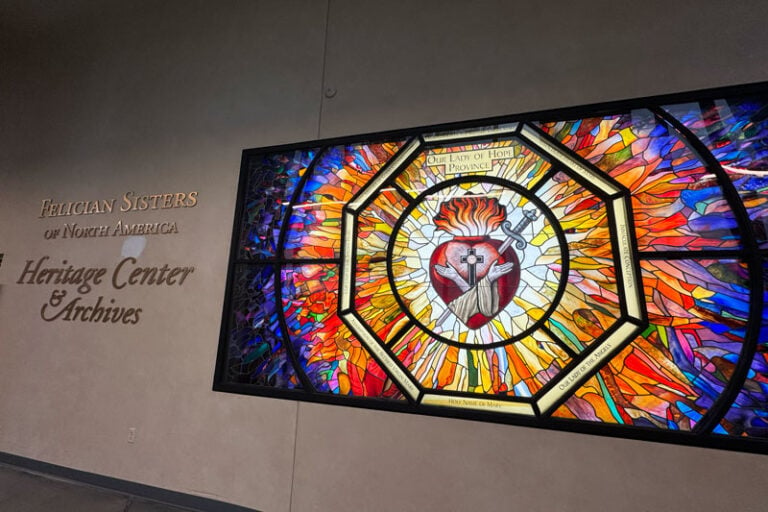
Together, as a community of faith, we celebrate the Eucharist and over time become more and more the presence of Christ for the world. That transformation becomes visible to the extent that we embrace the role of foot washers. As Felician Sisters, we cherish the legacy of Blessed Mary Angela. Her spirituality was deeply eucharistic. Blessed Angela was a foot washer par excellence! Her all-encompassing vision was that the sisters would serve wherever they were needed and serve all without exception. In other words, she meant, by her example, to inspire every Felician Sister to be a foot washer.
Over the last 150 years of Felician presence in North America, our ministries have evolved and changed with the needs of the time and place. The common denominator of our ministries has been the fact that we have been busy about being foot washers. It involves reaching out to those most in need — and sometimes that need is not necessarily financial or material. It means responding to a world that hungers for the healing touch of God’s compassion.
At the Last Supper, Jesus gave us the gift of the Eucharist. Over a lifetime, we become Eucharist when we spend our lives in service to others. As a eucharistic people, we connect what we do together around the altar with what we do when we step outside the church or chapel. Doing Eucharist and serving others, in whatever capacity, is the ministry of foot washing. We follow the example of the Master, who knelt down and washed the disciples’ feet.