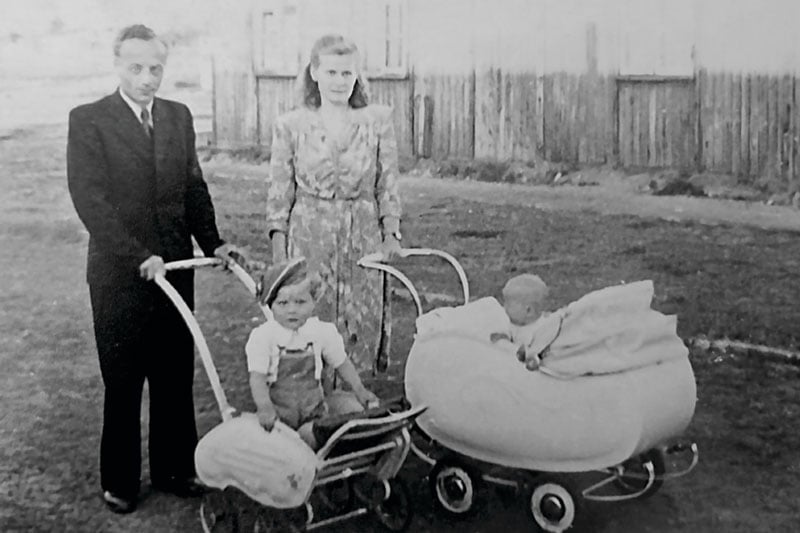
Though Isabelle Irene Kurczaba didn’t know it at the time, it was a hugely pivotal day in her 11-month-old life. The date: late summer, 1950.
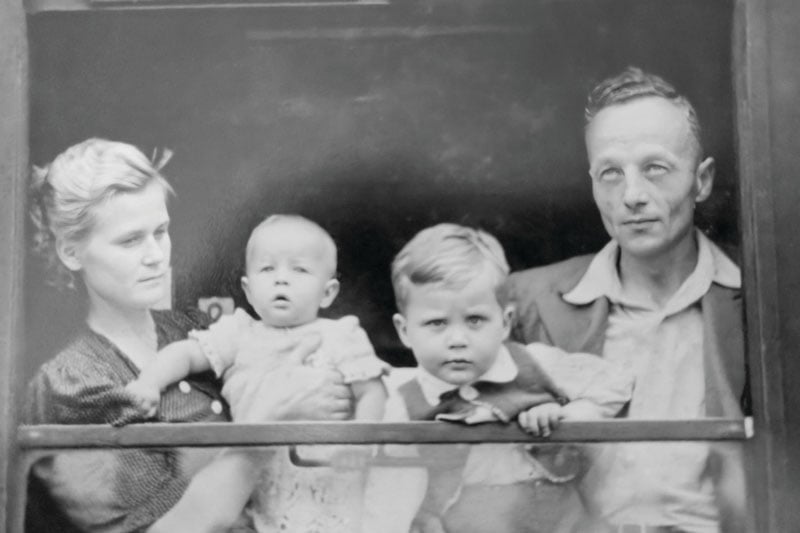
After several years in Polish Refugee Camp #11 in the British Zone of postwar Germany, in the tiny town of Watenstedt-Salzgitter, Isabelle’s parents, brother and she had just boarded a train that was headed to the coast. A photographer captured the moment.
The expressions on Isabelle’s parents’ faces seem … well, a lot of things. Anxious. Hopeful. Steadfast. Maybe a little befuddled.
At the coast, a ship would take the Kurczaba family to their new life in America. It would be a second chance made possible by the PolishAmerican refugee services, and by the strength and courage of Isabelle’s parents.
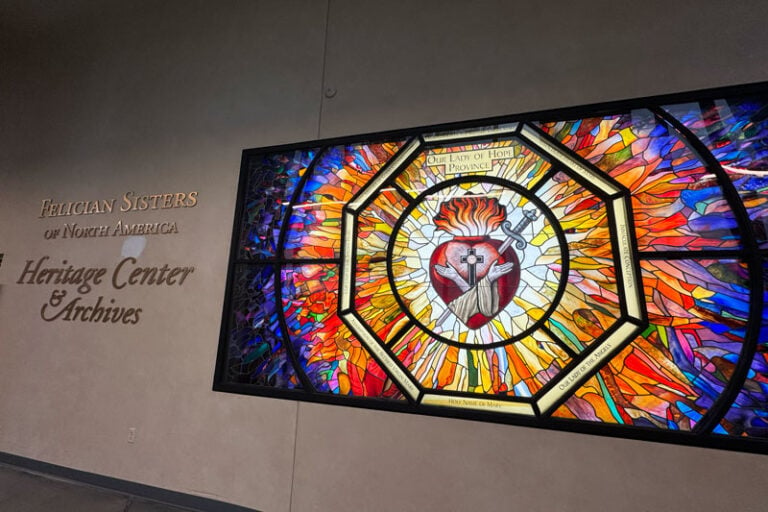
That little girl grew up to be Sr. Mary Renée Kurczaba, now the Local Minister of Our Lady of Hope Convent in Beaver Falls, PA, the Provincial House. In addition to serving as Local Minister, Sr. Renée wears many hats in the Felician community. She serves on the community’s Formation Team, works with sisters in temporary profession as Temporary Professed Director and contributes her leadership on the Board and Real Estate Committee for St. Felix Centre in Toronto, Ontario.
Her journey involved many twists and turns, but it’s been guided by her steadfast service to God and God’s people and her love for her Felician Sisters.
To help celebrate the country’s 250th anniversary, it is especially fitting to tell Sr. Renée’s story.
That story starts with her parents.
Stefania
Sr. Renée remembers her mom as a loving mother, a hard worker and a proud American.
Also very brave. “My mother’s family (last name: Zaremba) got into serious trouble near the end of the Second World War because they sheltered Jews on their farm,” says Sr. Renée. “One day, a truck driven by German soldiers came along and snatched up the whole family and sent them to a labor camp.”
When the war ended, Stefania and her family were placed in Polish Refugee Camp #11. After several years at the camp, the family decided to return to Poland—minus Stefania.
“By then she had met and married my father and had two children, my brother Alex and me” says Sr. Renée. “She’d made the decision to emigrate, rather than return home to Poland. She was quite young at the time with two little kids. That was a courageous thing to do—a huge step into the unknown for her.”
When the family settled with their refugee sponsor family in Calverton, a rural community on Long Island (NY), Stefania did housework: cooking, cleaning and laundry for her hosts.
After moving to Buffalo, NY and learning English from friends in the neighborhood as well as school, Sr. Renée remembers helping her mother with English translations during various appointments.
“She was so proud of her adopted country,” remembers Sr. Renée.
“I recall her saying to one of her friends in Buffalo that it was okay to listen to the local Polish station on the radio, but that we needed to listen to the American news too. She said ‘This is our country now.’”
Isabelle and her mother remained close throughout her teen years, which made for a bit of a challenge when Isabelle announced to her parents that she was joining the Felician Sisters.
“It’s actually funny to think about it now—though certainly not at the time—but it was a scene at my acceptance ceremony,” says Sr. Renée. “I remember looking out of the corner of my eye at my parents in their seats. My father was beaming; my mother was weeping.”
Adds Sr. Renée: “She came around to my calling, and supported me in it, but it was hard for her at first. I was very young and her only daughter.”
Adam
Sr. Renée’s father, Adam, was hardworking, pious, well-educated and determined to build a better life for his family.
After their years in the refugee camp in Germany, during which he’d wedded Stefania and had Alex and Isabelle, Adam had no intention of returning to communist Poland.
“I have his journals from that period and he couldn’t imagine living under that kind of rule,” says Sr. Renée. “He wanted a better life for us.”
“My father wrote in his journal that when we arrived in New York Harbor on September 5, 1950, one of the first things he saw was the Statue of Liberty. I wasn’t quite a year old, so I have no memory of that moment. I can’t imagine how that must’ve felt.”
“The way the refugee program worked was that you were assigned to a sponsor family before your journey was over; you then lived with them and worked until you paid off the cost of your voyage to the U.S.”
After working in the fields for their host family on Long Island, the Kurczabas moved to Buffalo, where Stefania and Adam raised their children and then, later in life, moved to Cheektowaga, NY.
Once the family settled in the Polish section of east Buffalo, Adam got work at the Bison Cheese Company, then the New York Central Railroad. Stefania worked for a bakery at the Broadway Market and later as a seamstress at Hickey-Freeman Company.
“My father had been a teacher in Poland before the war and he co-founded a Polish-language school in east Buffalo that met on Saturdays,” says Sr. Renée. “We learned the Polish language, history and Polish songs and dances.”
“I remember being surrounded by a lot of love and a lot of friends in those years. We knew many people because of my father’s school.”
The Felician connection
“Both my parents were religious, and early on we joined Transfiguration Parish in east Buffalo,” says Sr. Renée. “I went to the parish school and later to St. John Kanty Parish school, which is when I came into contact with the Felician Sisters. They taught at both schools!”
By grade school and junior high, she was helping the sisters with various chores, including cleaning the chapel. Sr. Renée remembers noticing at recess that the sisters would gather in groups to share news, laugh and enjoy each other’s company. It made an impression.
Isabelle went on to attend the local Felician-run Villa Maria High School. By her senior year, she’d met a boy, and they started talking about marriage.
“We both agreed, let’s finish college first,” remembers Sr. Renée. “But the summer after high school graduation, my mother took me on a two-month trip to Poland to learn about my mother country, and to meet my extended family. That was quite an experience for me, especially meeting my grandfather with his handlebar mustache.”
“You belong here.”
On returning from Poland, Isabelle heard that two of her friends had decided to become Felician Sisters.
It was soon after this news that Isabelle heard something else: God’s voice speaking directly to her.
“The telling thing for me was, what I heard in my head wasn’t ‘I belong there’ with the Felicians. Rather, it was ‘You belong there.’ It wasn’t me saying it, it was God saying it.”
After continuing to hear God’s call loud and clear in the following weeks, Isabelle took the initiative—at 17 years of age—to make an appointment with the Buffalo Provincial Minister herself. In the meeting, Isabelle announced to the esteemed minister: “I want to serve God.” Her mind made up, Isabelle told her parents about her plan and entered the order in September of 1967.
The desire to help refugees
Sr. Renée began teaching in grade schools—Buffalo, Lackawanna, Batavia and Salamanca (NY)—but always felt drawn to counseling. She earned her Bachelor’s and Master’s in the field from Canisius College (now Canisius University).
By 1988, she was ready to pursue her long-sought vocational calling as a counselor/case worker, and was hired by Catholic Charities. During the 24 years with Catholic Charities, Sr. Renée found her sweet spot as a Felician Sister: ministering to immigrants and refugees in Buffalo.
“I believe I have done important work in my service to God and God’s people before and after that time, but during those years is when I felt most useful to Him,” says Sr. Renée. “The people I worked with really needed me, and in very real ways, I needed them.”
Most were non-Christians from war-torn countries including Iraq, Myanmar and Somalia. Once in a while, the intense pressures of being a refugee would lead them astray, and some would succumb to neglect, spousal abuse, alcohol and drug use and other mental health problems. Sr. Renée would sometimes accompany her charges to court, then help them comply with what the judge ordered.
“A memory that has stayed with me from that time is when a Muslim man, a father, sought me out to ask for my help,” says Sr. Renée. “His daughter hadn’t come home that evening, and he was terrified for her. For a Muslim man to come to me, a Christian woman and sister, was unusual. But he trusted me.”
“I was so touched. It was clear how much we needed each other. His daughter ended up being fine.”
An honest assessment of our situation
As the 250th anniversary celebrations approach, Sr. Renée is worried about where the United States is going, and she doesn’t mince words about it.
“I think we’re losing our way,” she says. “During most of my lifetime, we as a country have been a world leader. We’ve been respected and relied upon.”
“Americans have always been known for our humanitarian work around the world. Poor countries have depended on us for our medical knowledge and supplies. We’ve now pulled back on so many of those efforts, and people are dying because of it.”
“The home front is equally worrisome,” she continues. “Of course we need to fix our immigration system, everyone agrees with that. But until we do, let’s not take it out on immigrant individuals and families who are protected by international law. Snatching people off the street is exactly what Hitler did to the Jews.”
“As a former refugee myself, this change in our country’s values is upsetting to me. I think about my family arriving in New York Harbor in 1950. My parents learned what the words on the Statue of Liberty meant: ‘Give me your tired, your poor, your huddled masses yearning to breathe free.’ It’s heartbreaking to think about that spirit of open arms in the context of what’s happening now.”
Going forward together
In this anniversary year, Sr. Renée is clear on what she thinks our priority needs to be: taking care of the weakest among us.
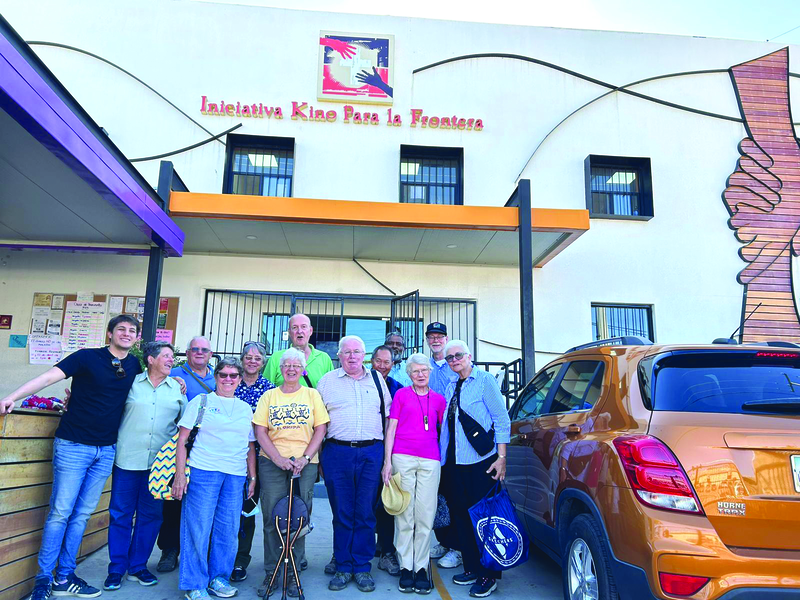
“We must help the poorest and the least powerful, and that includes our immigrants and refugees,” she says. “That’s where the strength of our country comes from, when we lift those people up and help them to thrive.”
“They help make this country great. They make it work, they give it spirit and energy and they give it moral fiber.”
“When I pray now, I often pray for my country,” she says. “I pray for all of us. Lord Jesus Christ, have mercy on us. Show us the way. Guide us to a new time.”