There was something wrong — something vaguely sinister — about the warm, early summer breeze that wafted over Enfield, CT, last June. Sr. Maryann Agnes Mueller smelled it when she stepped outside one night. The wind that streamed on a southwesterly path into the United States carried low-altitude smoke from a massive wildfire more than 700 miles away in Nova Scotia, Canada. Folks in Enfield couldn’t see the flames, but Let’s Finally Ban the Bomb the invading residue clawed at their throats, eyes and lungs. It was difficult to see and breathe. The smoke was everywhere, unstoppable and inescapable for anyone who was not indoors.
Sr. Maryann Agnes, the justice and peace coordinator for the Felician Sisters of North America, stood in the acrid air and had a chilling realization: Just as the smoke from the wildfires in Canada crossed national and state boundaries, so too could contaminate soot and fallout from detonated nuclear weapons. When a nuclear bomb is detonated, a plume of deadly radiation spreads and could affect millions of people.
“This is what it could be like,” Sr. Maryann Agnes thought as the smoke tickled her nose. “No, it could be worse than this.”
That is why Felician Sisters work tirelessly to support nuclear nonproliferation — a movement to limit and eventually ban the bomb everywhere, forever — and why Sr. Maryann Agnes hopes people of all faiths will join in the effort. “We need to do all we can, signing petitions and calling our legislators,” Sr. Maryann Agnes said. “We can’t wait. The fear is heightened now because of the wars in Ukraine and the Middle East, and also because of (heightened tensions between) India and Pakistan. We have to do something today and keep plugging away.”
The Union of Concerned Scientists estimates there are nearly 13,000 nuclear weapons worldwide. About 90 percent of that stockpile is held by the United States and Russia. The United Kingdom, China, France, India, Pakistan, Israel and North Korea also have nuclear powers.
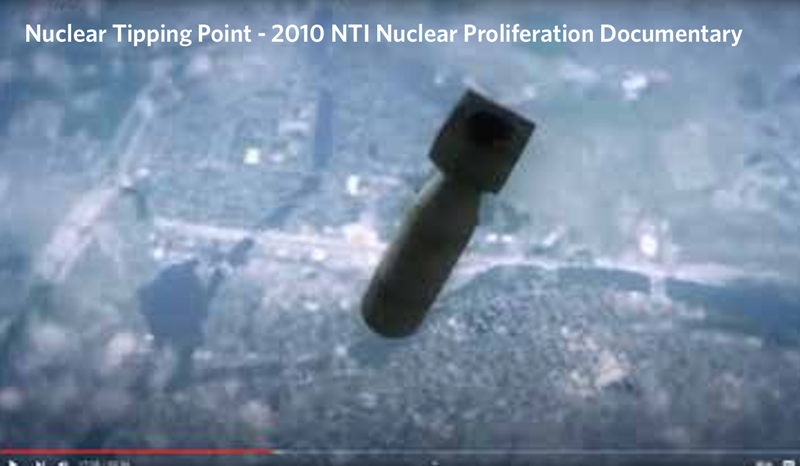
A nuclear explosion creates heat, radiation and blast damage that can result in thousands of instantaneous deaths. According to the Bulletin of the Atomic Scientists, direct radiation lasts less than a second, but it can be lethal for more than a mile in all directions from ground zero. The thermal flash from a 300-kiloton nuclear device causes first-degree burns as far as eight miles from the detonation point. The shock wave generates enough pressure to destroy most buildings within a threemile radius within 10 seconds. The most deadly concentrations of fallout particles occur within 10 to 20 miles of ground zero. Survivors who are farther away still could be exposed to near-lethal doses of radiation for days or weeks. Princeton University’s Program on Science and Global Security model indicated that 300 million Americans might be exposed to a fatal radiation dose in a worst-case scenario. The destruction of crops and infrastructure would lead to food shortages or famine.
“We’re all gonna be impacted if there’s a nuclear war, even if it’s not in the United States,” Sr. Maryann Agnes said.
Nuclear weapons are at odds with all seven tenets of Catholic social teaching, which include demands for the care of God’s creation and the protection of the life and dignity of the human person. Yet, after the Japanese cities of Hiroshima and Nagasaki were bombed in August 1945 to end World War II, the Catholic Church for decades tolerated nuclear weapons as a deterrent or for defensive purposes after being attacked.
The paradigm shifted in 2006, when, in his World Day of Peace message, Pope Benedict XVI said the view that nuclear weapons are necessary for deterrence and defense is “not only baneful, but also completely fallacious.” In 2014, a report released by the Vatican called “Nuclear Disarmament: Time for Abolition,” declared “the very possession of nuclear weapons, even for purposes of deterrence, is morally problematic.”
The United States and Russia signed the first Nuclear Non-Proliferation Treaty in 1968, and came to other agreements over the years. However, in February 2023, one year after Russia invaded Ukraine, Russian president Vladimir Putin said his country was “suspending its participation” in New START, the last remaining nuclear weapons treaty between the U.S. and Russia.
“We are asking for the nuclear states to sit down to negotiate again,” Sr. Maryann Agnes said. “It’s about putting away the sword.”
Sr. Maryann Agnes cited the example of St. Francis and Sultan Malik al-Kamil, who engaged in peaceful and respectful discussions in 1219 during the Fifth Crusade. “They put down their weapons, listened to each other, and realized they have a lot more in common than they had differences.”
Striving for nuclear nonproliferation isn’t a duty only for presidents, popes and potentates. Sr. Maryann Agnes stressed that everyone must get involved. A good place to start is usccb.org, the U.S. Conference of Catholic Bishops (USCCB) website, which has information on Church teachings and action plans. “I think every human being would want to do this because everybody wants to live in peace.”
Be Aware/Take Action
Sign up for alerts at the USCCB Action Center