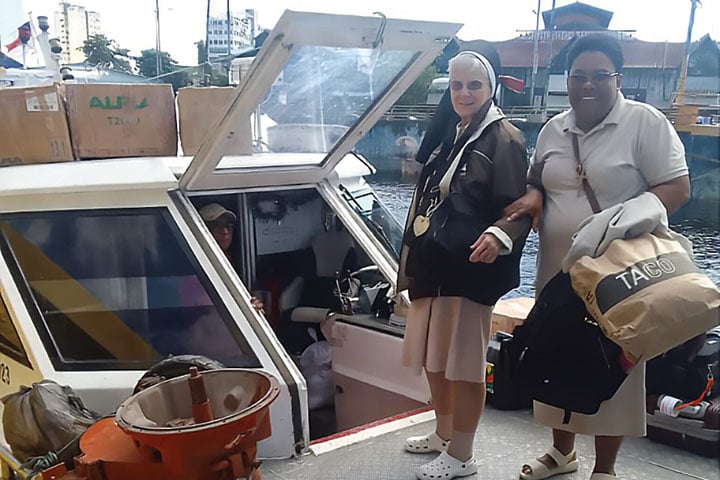
As gang violence continues in the poorest country in the Western Hemisphere, the Haitian people continue to seek knowledge and a way to better themselves. Three Felician volunteers share their tutoring experience bringing change to Haiti virtually—one person at a time. Sisters Marilyn Marie Minter and Mary Inga Borko, through their mission work in Jacmel, Haiti, discovered the need and desire of teenagers and young adults to learn English, and they knew the impact it could have on their futures. In 2019, the sisters launched the Haiti Remote Tutor Program.
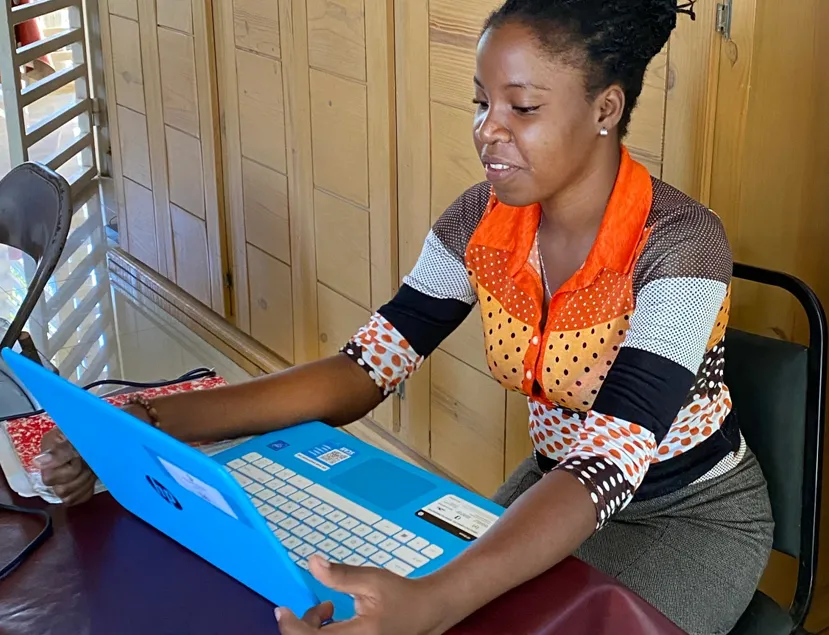
The program is part of Felician Volunteers in Mission (VIM) and helps Haitian students prepare for online education that requires English. Nothing is as powerful at making change as education, and Haitian students are eager to learn. Cheryl Hufnagel, a former teacher herself, was recently asked to help coordinate the tutoring program. She had the opportunity to meet the Haitian students on an online Zoom meeting for the first time in January. “What struck me was their desire to learn and their appreciation for tutors. With the current political crisis in Haiti, this program gives them hope in difficult times.”
We talked to three volunteer tutors and found a common thread:
The impact the program has made on tutors is almost as strong as the impact they are making in the lives of the students.
Carol: Retired Medical Educator, Connecticut
When did you begin volunteering with the program and who do you tutor?
I started about two years ago after reading about it in Felician magazine. Peterson is my student. He works at the mission in Haiti teaching children how to use computers. It’s funny because although I am helping him with English, he is helping me with computers! At first, I had trouble sharing my screen and doing other things in Zoom, but Peterson helped me learn.
How do you structure your sessions and what are Peterson’s goals?
He is very into YouTube and so we’ll use that as a resource for information. He really wants to practice speaking verbally. I’ll take vocabulary words we practice (like vegetables, for example), and will ask what kinds of vegetables he likes to eat, what his family grows on their farm, so we can apply the lesson to conversation. At the end of each class, he will say, “May God bless you. I am so grateful to you.”
Has he made progress over the time you’ve met with him?
He is doing so well, not entirely because of me, but because he is highly motivated. He really wants to go to college. When I hear him speak now, I realize how far he has come, and I’m pleased to be part of his growth in English. I love working with him. Nothing would make me happier than knowing he went on to higher education.
What would you say to potential volunteers?
It makes you feel so good to help another human being, help them beyond what they could do without you. I so hope there will be more who step forward and help these young people.
Bob: Retired High School Science Teacher, Michigan
How did you find out about the program?
One of my fellow members of our church choir mentioned the sisters in Haiti were looking for volunteer tutors. I already was tutoring two Ukrainian students, so adding one more student made sense.
Who is your student and what are his goals?
Jean-Claude is a young priest. He already speaks English pretty well, and he wants to be able to say Mass in English. To prepare for our weekly tutoring sessions, I find the parts of the Mass he needs, and when we meet, I help him with pronunciation.
How would you describe your experience as a tutor?
It’s fabulous. It’s more than just teaching a class. It expands your horizon on how things are elsewhere. We had a session when Jean-Claude was on a visit back home, and I got to meet his parents, see their house and animals in the yard. You develop a close relationship and want to learn more about their situation.
Florence: Felician Associate, Ontario
How did you learn about the Haiti Remote Tutor Program?
I am always looking to do outreach, especially in my role as a Felician Associate. I do a lot with St. Felix Centre (in Toronto) and teach catechism at my parish. I have a special calling to work with children and young people, so when I saw in the Felician magazine they needed volunteers to tutor young people, I signed up right away.
Who is your student and what are her goals for the program?
I actually have two students now! Last year, I began with Dalandie, a 19-year-old girl, and the sisters recently asked me to tutor 17-year-old Gaëlle, because there aren’t enough volunteers to work with the young people who are waiting.
How do you structure the sessions?
I always begin with a psalm, and we pray the Our Father together. Neither of the girls can speak English yet, so I use an online English-to-Haitian-Creole translator and type into the chat to communicate. We are concentrating on the letters of the alphabet and vowels right now. I also give them material to read and practice for the next week. We end the session with a prayer that our work together will bear fruit.
What would you say is important about this program?
This program equips the young people of Haiti for a better future. It doesn’t cost you anything, you just have to make time. When I see the girls’ faces on the screen, I feel so much joy. They realize someone cares enough about them to help.